
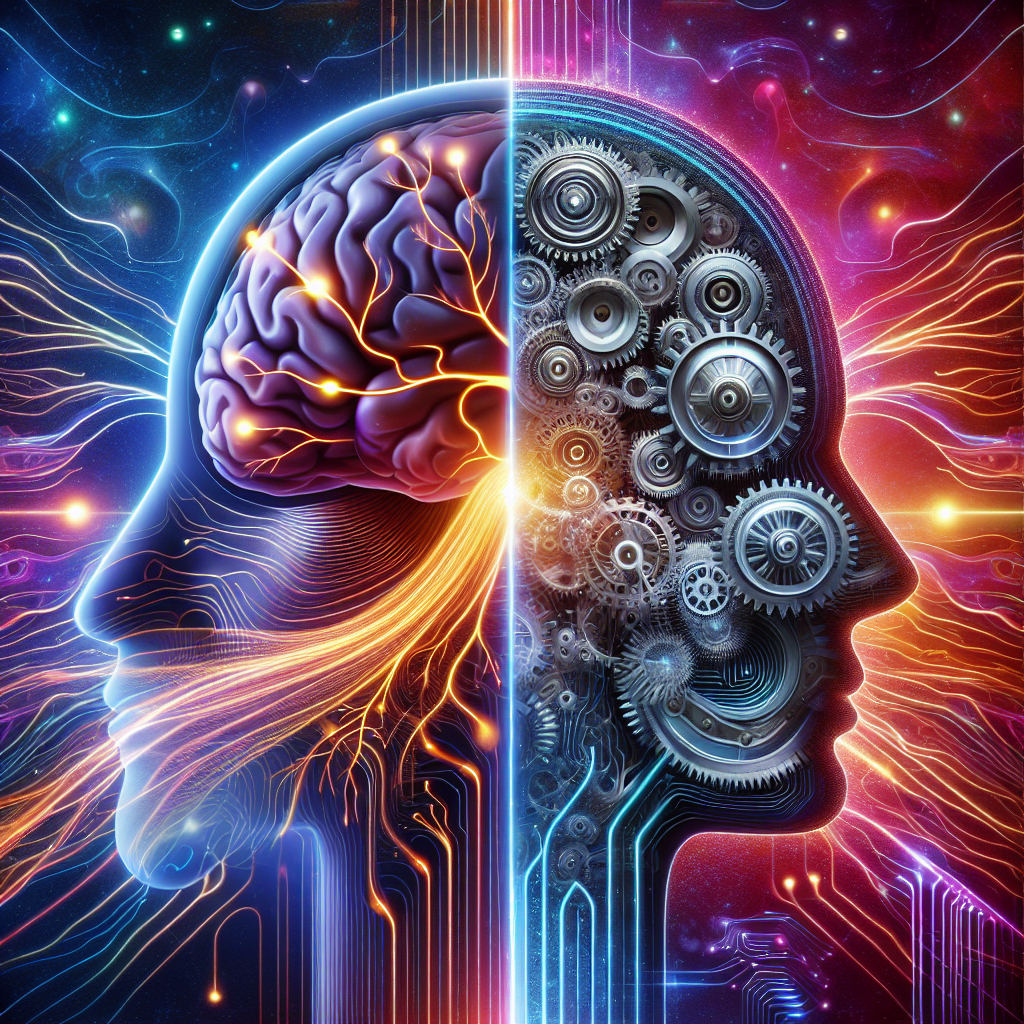

In our ever-evolving landscape of technology and innovation, the mystery of thought—both organic and artificial—continues to captivate us. There is an undeniable elegance in the way human cognition orchestrates countless complex reactions, and emerging AI tools echo that process through layers of digital computation. The notion that machines might “think” like us invites us to consider not just the raw output, but the intricate processes of mapping meaning, understanding context, and generating new ideas.
At its core, thought is the process of drawing insights from information. In humans, this is an emergent property stemming from interconnected neural networks, where experiences, emotions, and sensory inputs converge. In contrast, large language models operate by parsing massive arrays of data, using attention mechanisms and embeddings to capture relationships between words. While these statistical models excel at pattern recognition and language generation, the debate persists: are they truly reasoning, or simply mirroring human expression without the intrinsic spark of genuine understanding?
Exploring this question reveals fascinating parallels. Humans naturally distill information and form inferences, even when faced with abstract concepts. Similarly, AI models are designed to generate coherent sequences by leveraging deeper contextual clues embedded in the data. This parallelism has spurred advances in techniques that augment machine output with self-reflection protocols, often resulting in more reliable and nuanced responses. The process, which may be likened to chain-of-thought reasoning, underscores the potential for digital systems to simulate elements of human thought.
Yet, there remains a subtle but significant difference. Human reasoning is often characterized by a flexible and adaptive understanding of the world—a capacity honed through lived experience, emotion, and for that matter, the ever-changing physical environment. In contrast, AI systems primarily operate on static datasets, and their “understanding” is derived from correlational patterns rather than genuine causal insight. This statistical foundation, while powerful, can sometimes lead to missteps such as hallucinations or an inability to transcend familiar patterns. It is this fragility in machine reasoning that highlights both the promise and the inherent limitations of current technology.
The future may well see these boundaries continue to blur. As developers refine models through techniques that bridge statistical learning and dynamic reasoning, we are likely to witness AI systems that not only generate impressive outputs but also exhibit a form of adaptive cognition. By synthesizing layers of data in ways that mirror the hierarchical structure of human thought, these tools can offer profound insights into both artificial intelligence and our own cognitive processes.
Ultimately, whether through the lens of advanced neural networks or the spark of human ingenuity, the exploration of thought remains a vibrant field of inquiry. As we continue to build and refine these digital systems, the conversation evolves beyond a simple comparison of machine versus human intelligence, inviting us to redefine what it truly means to think, understand, and ultimately, to create.


