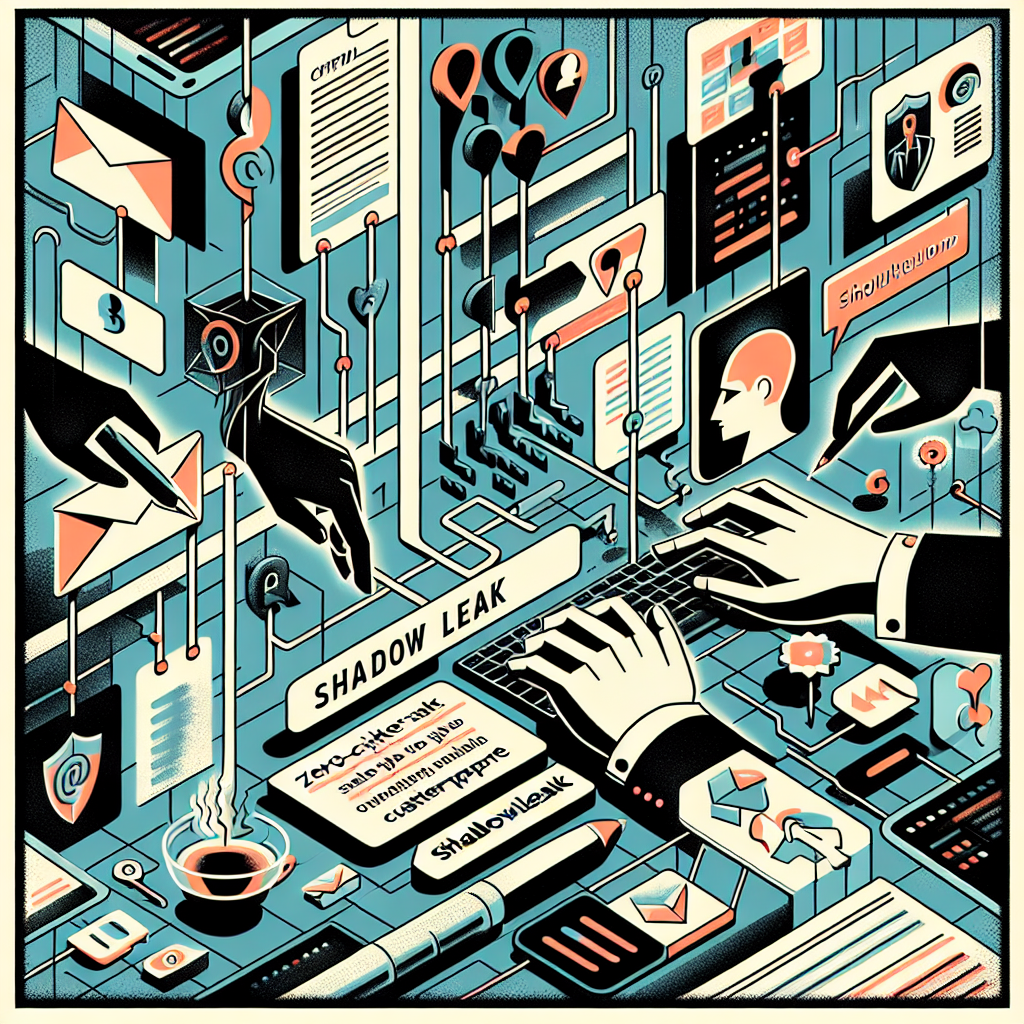

In the rapidly evolving landscape of AI-driven customer support, where tools like ChatGPT are increasingly integrated into workflows for analyzing emails, CRM data, and internal reports, a new security threat has emerged that demands immediate attention from enterprises. A recently discovered zero-click, server-side vulnerability in ChatGPT’s Deep Research agent, known as ShadowLeak, allows attackers to siphon sensitive data without any user interaction, bypassing traditional endpoint security measures entirely.
Understanding the ShadowLeak Vulnerability
ShadowLeak represents a sophisticated exploit that operates entirely on OpenAI’s servers, making it invisible to users and difficult for security teams to detect. Unlike conventional attacks that require user clicks or downloads, this flaw enables data exfiltration through autonomous agent actions triggered by something as innocuous as a specially crafted email. Experts warn that this could expose millions of business users, particularly those relying on AI for strategic decision-making and automated support processes.
As AI tools become central to customer service operations—handling everything from ticket triage to deep issue analysis—the risks multiply. Enterprises adopting these technologies must recognize that built-in safeguards may not suffice against unanticipated manipulations of AI-driven workflows.
Key Implications for Businesses
With over 5 million paying business users of ChatGPT, the scale of potential exposure is immense. This vulnerability highlights the need for robust AI security practices, especially in environments where sensitive customer data, such as support tickets or compliance information, is processed. It underscores broader challenges in AI governance, including the importance of evaluating server-side risks and ensuring that autonomous agents do not inadvertently leak information.
In customer support contexts, where AI agents might access backend databases or historical ticket data, such exploits could lead to unauthorized data breaches, eroding trust and compliance. The incident serves as a reminder that while AI enhances efficiency—resolving up to 50% of queries autonomously—it also introduces novel attack vectors that traditional security solutions might overlook.
How to Stay Safe: Essential Learnings and Best Practices
To mitigate risks like ShadowLeak, organizations should adopt a multi-layered approach to AI security. Here are key learnings extracted from this vulnerability, informed by best practices in AI governance and cybersecurity:
- Implement Layered Defenses: Combine endpoint protection with server-side monitoring to guard against zero-click exploits. Focus on AI-specific frameworks that address risks like prompt injections and data exfiltration.
- Monitor AI Workflows: Regularly audit autonomous agent activities for anomalies, using tools that provide visibility into server-side operations without relying solely on user endpoints.
- Deploy Advanced Security Solutions: Utilize top antivirus and ransomware protection software to prevent lateral threats, ensuring they cover AI-integrated systems.
- Enforce Strict Access Controls: Limit AI agents’ permissions to sensitive data, implementing role-based access and human oversight for high-risk processes.
- Enable Logging and Auditing: Maintain detailed logs of AI interactions to detect and respond to unusual patterns early.
- Integrate Anomaly Detection: Leverage additional AI tools for real-time alerts on potential breaches, enhancing traditional security measures.
- Educate Teams: Train employees on AI-related threats, emphasizing the risks of autonomous workflows and the importance of vigilance.
- Combine Technology with Practices: Blend software defenses with operational best practices, such as continuous evaluation of AI tools for emerging vulnerabilities.
By prioritizing these strategies, businesses can better protect their AI-driven operations, ensuring that innovations in customer support do not come at the cost of security. Staying ahead requires ongoing vigilance and adaptation to the evolving threat landscape.
Relevant Resources for AI Security
For deeper insights into securing AI applications, consider these resources:
- OWASP Top 10 for LLM Applications 2025 – A guide to key vulnerabilities and mitigation strategies for AI systems.
- MITRE ATLAS Framework – A matrix for understanding AI-specific cyber threats and defensive tactics.
- Lakera’s AI Security Resource Hub – A collection of resources for AI security best practices.
Adopting these tools and frameworks can help organizations build resilient AI infrastructures, particularly in high-stakes areas like customer support and data analysis.